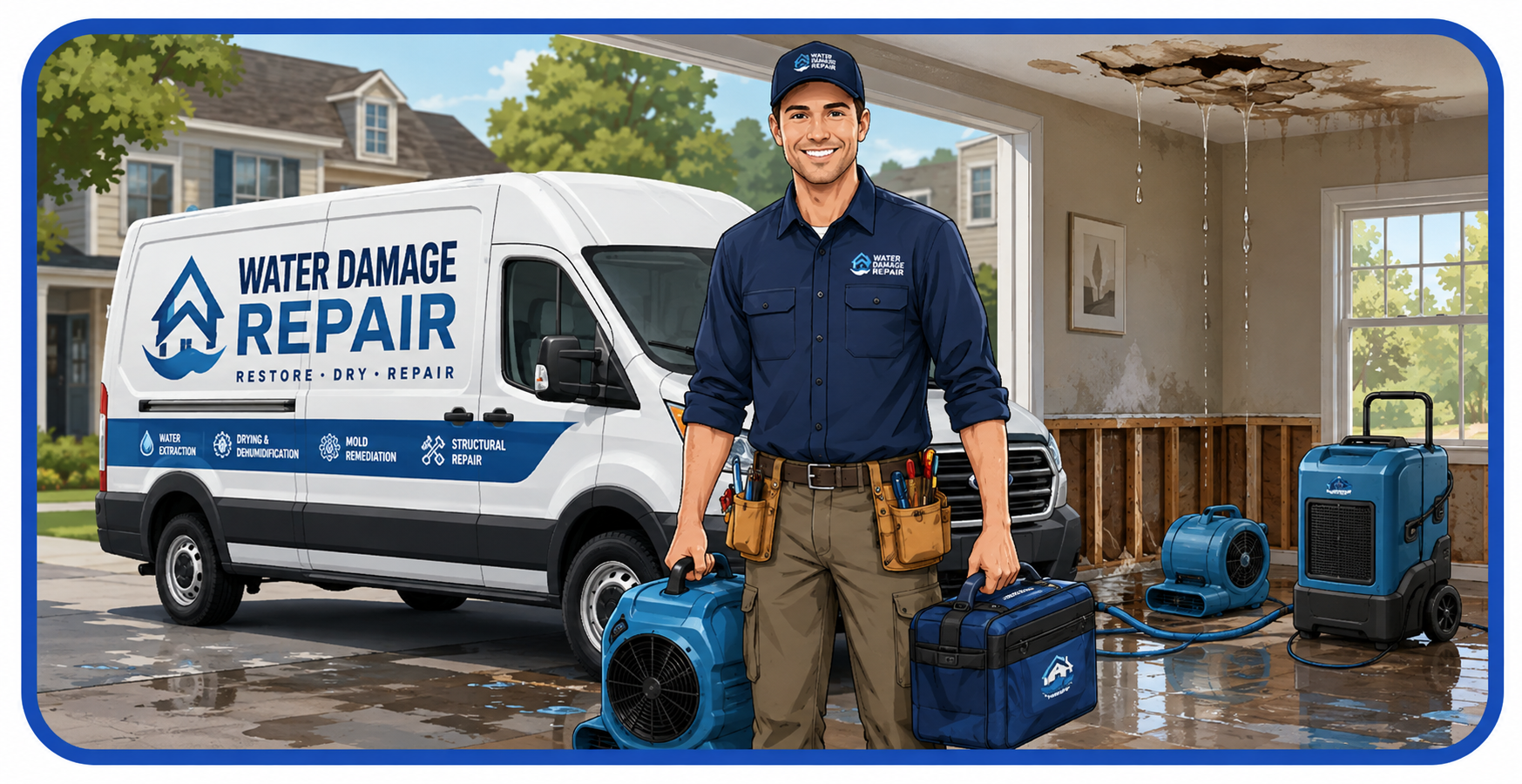
South Dakota, SD stretches across more climate zones than most people realize, and a drying strategy that works in one region can fall flat in another — our regional crews are matched to the conditions of their own part of the state.
Call +1-844-578-1604
Regional crews staged across South Dakota, SD
Flat-rate quote before any equipment runs
IICRC-certified technicians on every truck

Aqua Guard Water Damage's South Dakota, SD operation grew one metro at a time rather than opening a single flagship office and hoping response times held up statewide.
Pricing across South Dakota, SD reflects the actual regional market, so a South Dakota, SD homeowner never pays a rate calculated for a different part of the country.
We also keep documentation formatted the way insurance adjusters actually want to see it, since most of our jobs end up crossing an adjuster's desk at some point.
Not every water problem announces itself with a flooded floor. Most start quietly, and catching one of these signs early is usually the difference between a same-day fix and a much bigger repair.
Fresh paint over an old stain can hide the problem visually for a month or two, right up until the drywall paper backing gives out.
If a dehumidifier and open windows don't clear the smell within a day or two, there's an active moisture source that ventilation alone won't solve.
A hollow sound from tile that used to sound solid usually means the mortar bed lost adhesion from sustained moisture underneath.
Catching a hidden leak through the water bill is far cheaper than waiting for it to surface as a flooded room.
Wallpaper that suddenly lifts at the seams after holding fine for years often signals a change in the humidity or moisture level inside that wall cavity.
A small patch of mold in a corner or along a baseboard means conditions behind that surface have supported growth for a while — the source needs to be found, not just wiped away.
If more than one of these sounds familiar, it's worth a professional moisture check sooner rather than later.
Treating Water Extraction as a single continuous job, rather than a series of handoffs, is what keeps timelines shorter and documentation consistent.
The equipment on our trucks scales up or down to the job, but the process — assess, extract, dry, verify, repair — doesn't change.
The first hour after a water loss decides how much of the structure is salvageable, which is why extraction is always the first truck-mount job, not an afterthought behind paperwork.
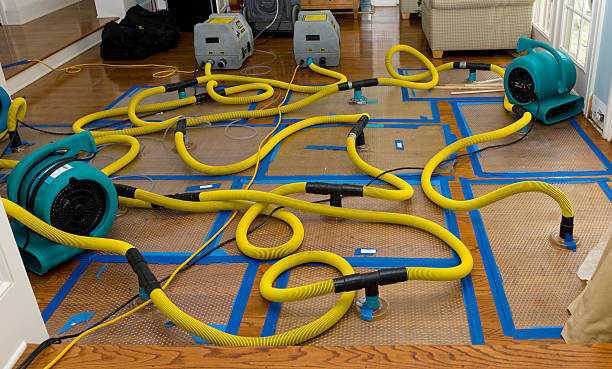
Air movers and dehumidifiers get placed according to psychrometric readings taken at assessment, not a default layout used on every job regardless of conditions.
Materials that had direct contact with contaminated water almost always come out rather than get dried in place — that's a safety call, not a cost-cutting one.
Antimicrobial treatment on studs, subfloor, and other porous surfaces happens during the drying phase, especially anywhere that stayed wet more than 48 hours.
Once moisture readings confirm the structure is dry, the same team that documented and dried the loss hands off directly into drywall, insulation, and flooring repair.
Furniture, electronics, and documents get assessed on-site, with salvageable items cleaned and stored while the space dries.


Four steps, no guesswork — here's exactly what happens between your call and a verified-dry structure.
Real person, real questions, fast routing — the goal is getting a truck moving within minutes of hanging up.
Photo and moisture documentation happens before any equipment gets touched, which protects your insurance claim later.
Equipment placement follows the specific psychrometric numbers from assessment, not a generic pattern used on every job.
Final verification is where corners often get cut industry-wide; we treat it as mandatory.
None of these four things matter in isolation — it's the combination of licensing, speed, honest pricing, and a real guarantee that actually changes the outcome of a water emergency.
Licensing and insurance aren't paperwork we keep in a drawer; they're what let us stand behind the work if something doesn't go as planned.
Shorter drive times matter most in the first hour after a loss, which is exactly when local staging pays off.
We'd rather have the pricing conversation upfront than after the job's already underway.
A guarantee only counts if it's backed by a second moisture reading, not just good intentions.
Every job closes with documented moisture verification, because a promise without data behind it isn't much of a promise.
The standard doesn't change based on job size — a single bathroom flood gets the same sign-off criteria as a full commercial loss.
Call +1-844-578-1604Our South Dakota, SD coverage spans every major population center, with local dispatch handling routing so response times stay consistent statewide.
As South Dakota, SD grows, our regional crew count grows with it, instead of stretching one central office thinner.

"Our water heater gave out overnight and by the time I found the pool of water it had already crept under the cabinets. The crew here in South Dakota, SD had it extracted and drying equipment running before I finished my coffee."
Renee A., South Dakota, SD"They found mold starting behind our baseboards before it spread and handled containment properly instead of painting over it like a previous company tried."
Owen D., South Dakota, SD"They didn't cut corners on the sanitization step even though it clearly slowed them down — with two kids in the house, that mattered to us."
Fatima J., South Dakota, SD"Every cost question got a straight answer, even the awkward ones, which is more than I can say for the last two contractors I dealt with."
Lucas P., South Dakota, SD"The thermal scan caught damage behind a cabinet that could have turned into a much bigger mold problem if it went unnoticed."
Grace T., South Dakota, SD"Working a commercial job around our business hours could have been a scheduling nightmare, but they made it simple."
Nathaniel W., South Dakota, SD"A cracked supply line under our kitchen sink went unnoticed for days, and by the time we called, the subfloor was saturated. They only replaced what actually tested wet, not the whole floor."
Bianca H., South Dakota, SD"Storm runoff got into our crawl space and the smell alone told us something was wrong. They found a failed vapor barrier and fixed the actual cause during the same visit."
Derek S., South Dakota, SD"They found the actual source of the leak instead of just drying the surface damage, which saved us from the same problem happening again in a month."
Melissa C., South Dakota, SD"Being out of town when it happened was stressful enough — having a crew that could work directly with our property manager made it manageable."
Victor N., South Dakota, SD